Fat
≈ 155 g/day
Olive oil, butter, avocado, fatty fish, nuts, full-fat dairy, eggs. The bulk of your plate is dressed in something rich.
A short, honest guide to ketogenic eating — without the green-juice clichés, the bro-science, or the lectures. Read it in ten minutes, then decide for yourself.
The ketogenic diet is a high-fat, moderate-protein, very-low-carb way of eating. By keeping carbohydrates under roughly 20–30 grams of net carbs per day, your body shifts from burning sugar to burning fat — a metabolic state called ketosis. People do keto for steady energy, fewer cravings, body recomposition, and, originally, for managing epilepsy. The principle is older than nutrition science as we know it.

The "ratio" you'll hear about — 70 / 25 / 5 or 75 / 20 / 5 — describes the share of calories, not grams. In grams, it comes out roughly like this for a 2,000-calorie day.
≈ 155 g/day
Olive oil, butter, avocado, fatty fish, nuts, full-fat dairy, eggs. The bulk of your plate is dressed in something rich.
≈ 125 g/day
Meat, fish, eggs, cheese. Enough to keep muscle, not so much that excess protein converts to glucose in the background.
≈ 20–30 g/day
From leafy greens, low-sugar vegetables, berries in small portions. This is the budget — protect it.
A practical rule: if it grows above ground and didn't come in a wrapper, it's probably fine. If a label lists more than five ingredients and one of them ends in -ose, it's probably not.
The American keto stereotype — cheese, bacon, butter, repeat — is one (perfectly fine) tradition. It's not the only one. Whole cuisines are quietly low-carb already, or sit one ingredient swap away from being keto.
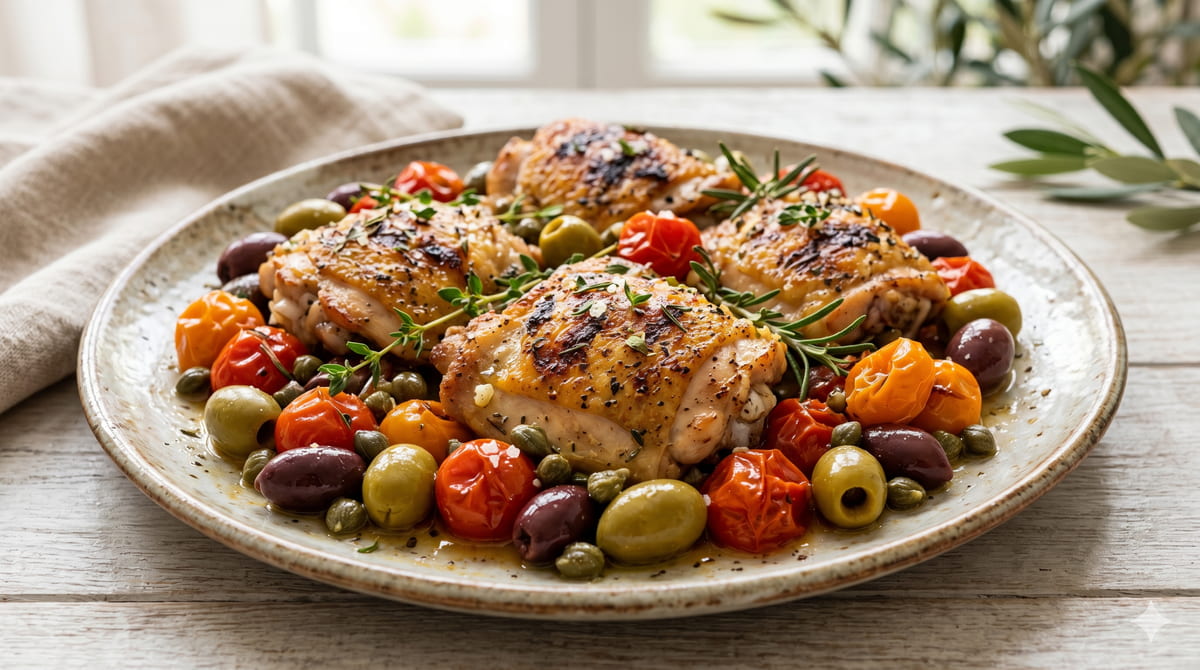
Olive oil, fish, lamb, greens, herbs, yogurt. Swap the bread basket for more salad and you're already there.
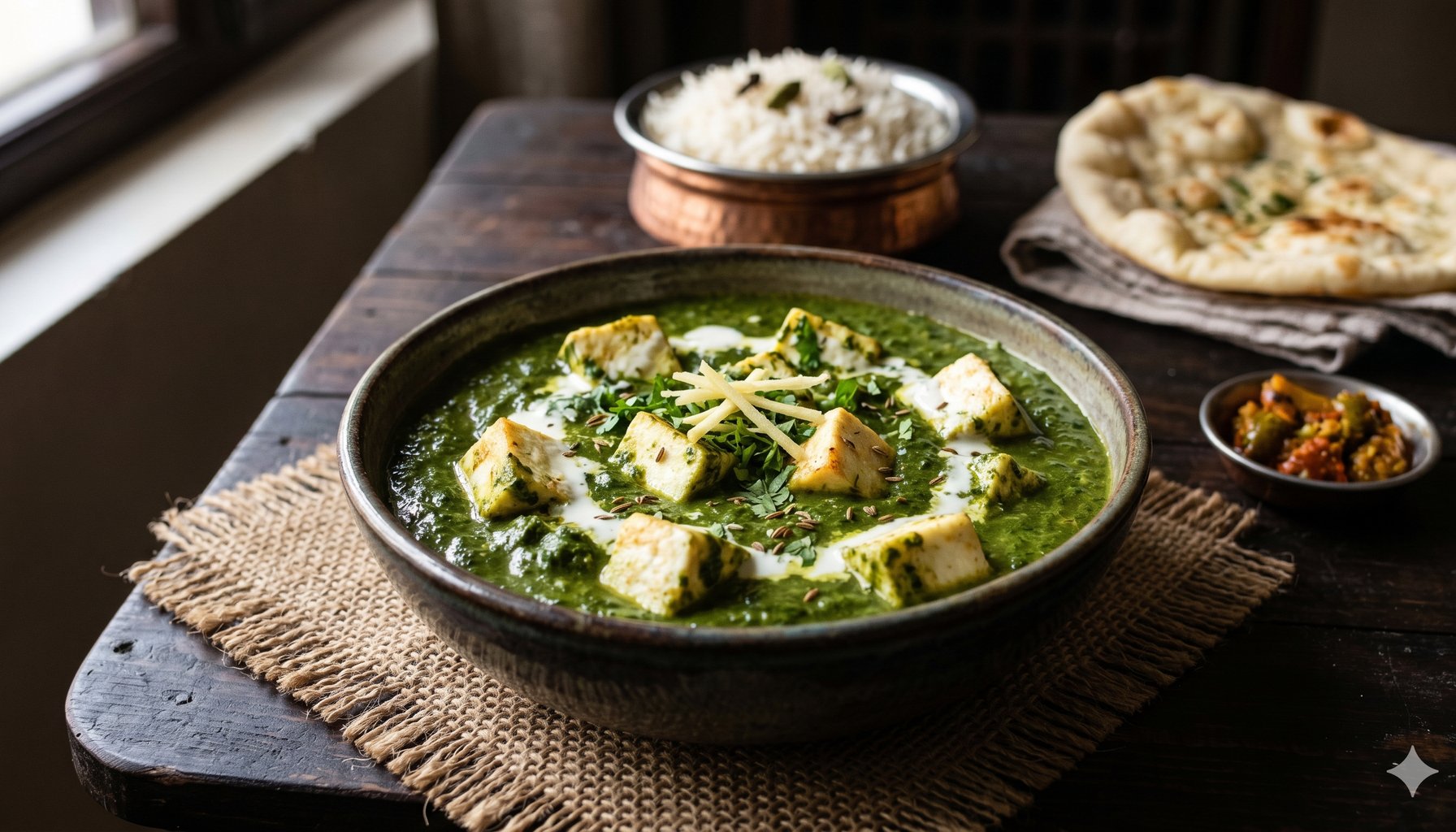
Paneer, ghee, tandoor meats, leafy curries. Skip rice and naan; the gravies are the point anyway.
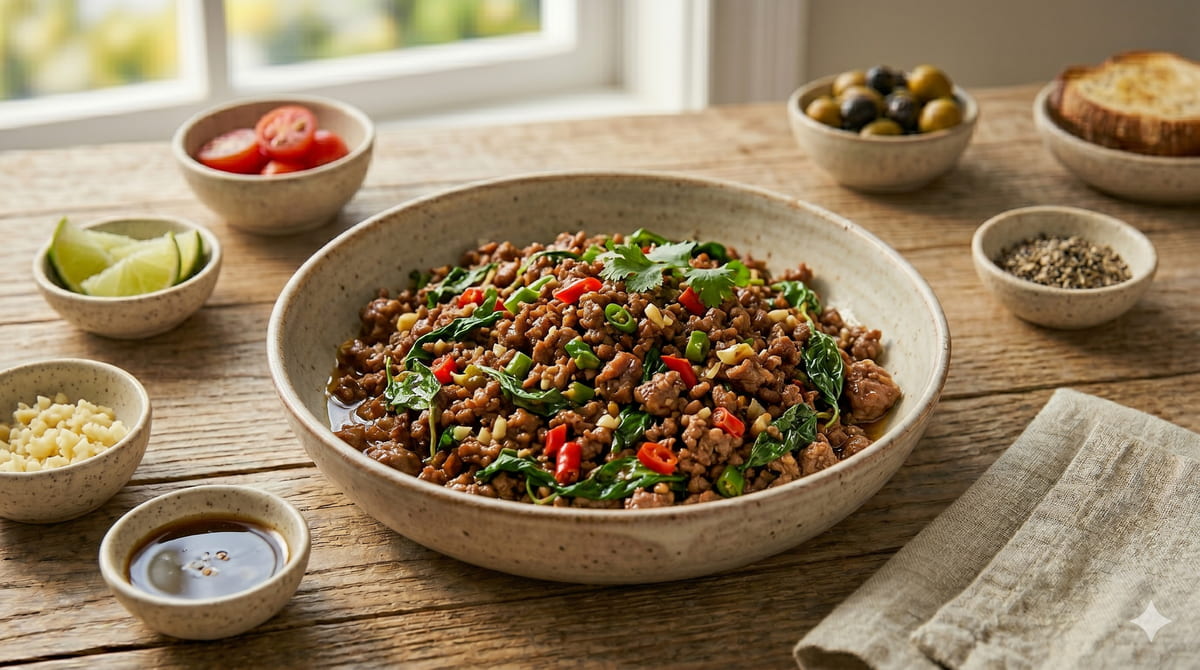
Coconut milk curries, grilled meats, herbs. Hold the rice and most noodle dishes — laab and panang are friendly.
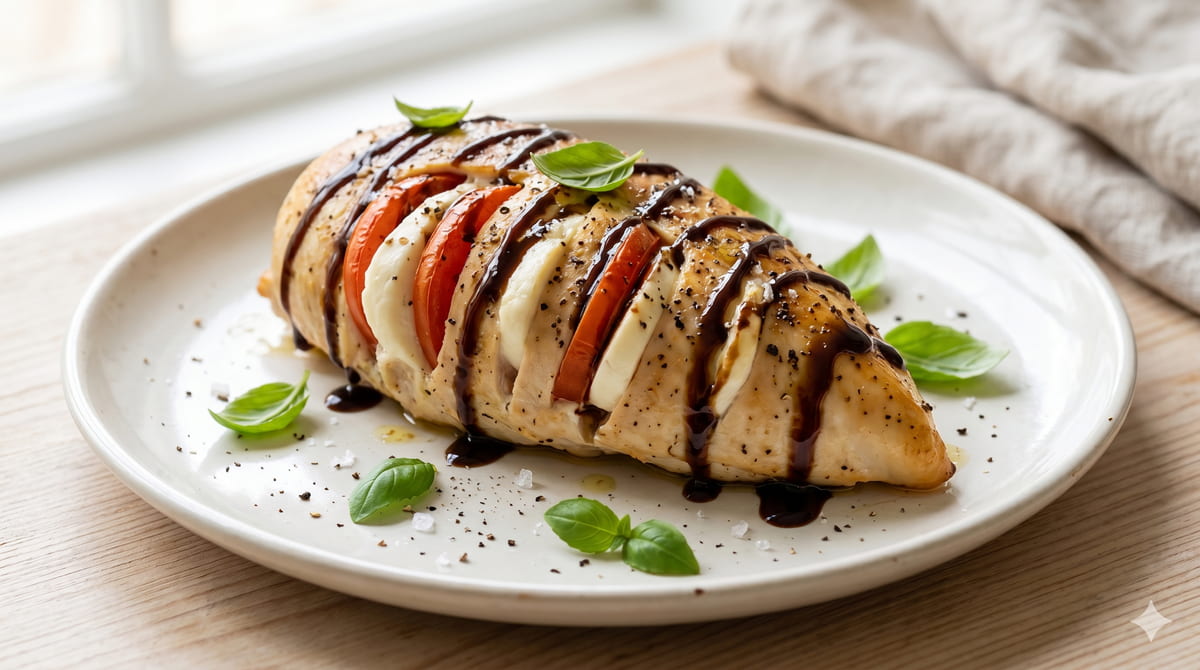
Antipasti, bistecca, hard cheeses, olive oil, slow-cooked greens. The pasta is one course of many.
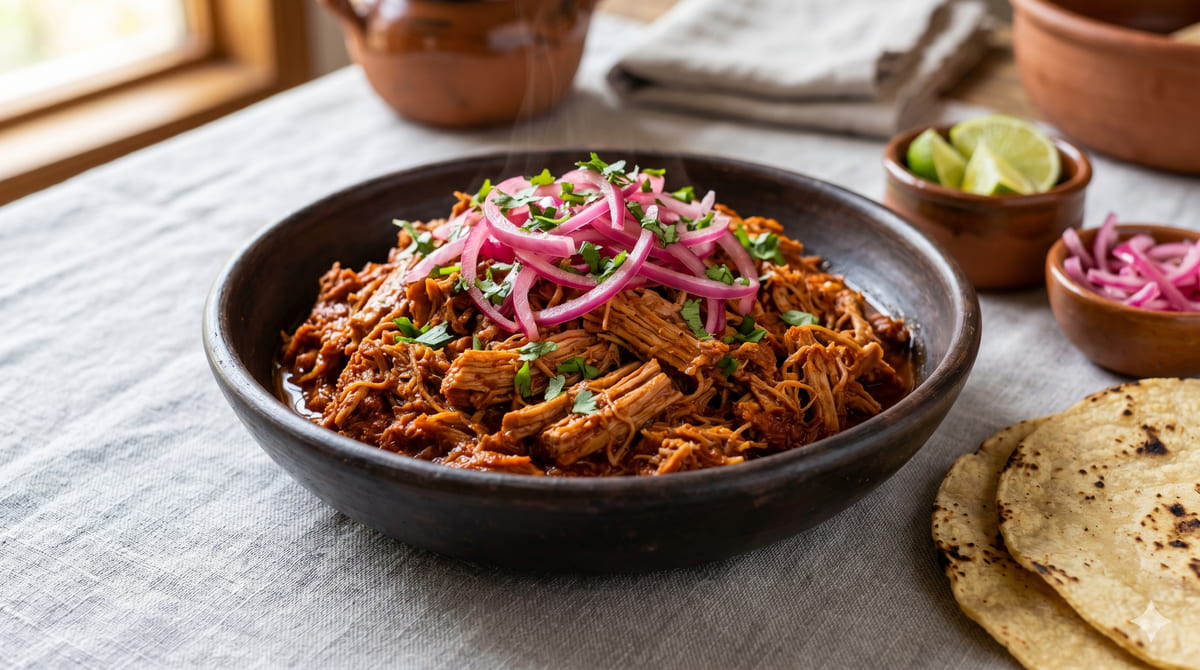
Carnitas, cochinita, fajitas, guacamole, queso fresco. Lettuce wraps replace tortillas without protest.
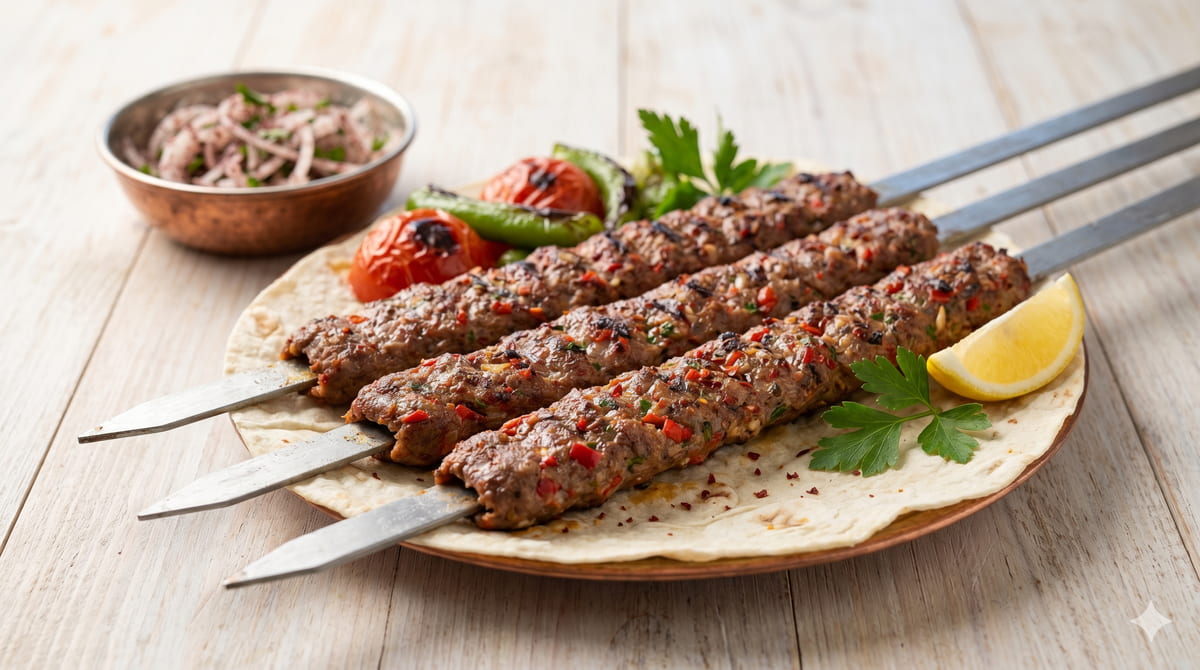
Kebabs, mezze, yogurt sauces, grilled aubergine. Skip the pide; the rest of the table is keto already.
Ketoly's recipe library leans into this — cuisines from around the world, every dish macro-checked, written like a magazine column instead of a fitness instruction.
Total carbs on a nutrition label include fiber. Fiber doesn't raise blood sugar, so we subtract it. Sugar alcohols (erythritol, allulose, xylitol) mostly don't raise it either, so we subtract those too. The leftover number — the one that actually breaks ketosis — is your net carbs.
Most keto plans cap net carbs at 20 grams per day for the first few weeks, then loosen to 30–50 g once you're metabolically settled. Some people stay strict; some swing higher on training days. The number is a budget, not a verdict.
This is also where tracking earns its keep. Doing the subtraction in your head for every meal is a chore — apps exist for a reason. Ketoly does the math automatically, including the sugar-alcohol step most trackers skip, and surfaces a running net-carb total for the day. You don't need to log fanatically; you do need to know roughly where you stand.
Your body has two main fuel sources: glucose (from carbs) and fat. When carbs are abundant, glucose is the default — easy to use, easy to store. Strip carbs out for a few days and the liver starts converting fat into ketone bodies: small molecules that cross into the brain and power most of the tissues that would normally run on sugar. That fuel-switch is ketosis.
Most people feel it within three to five days. Hunger flattens out. Energy stops spiking and crashing. The afternoon dip fades. Some people report sharper focus; the research on cognition is promising but still settling.
The first week can be rough. It's nicknamed the "keto flu" — headache, low energy, fog, sometimes muscle cramps. It's not really flu; it's a shift in how your kidneys handle salt and water. Drink more, salt your food, and supplement magnesium and potassium if you feel it. It almost always passes within a week.
Ketosis itself is well-studied. It's how every human's body responds to fasting, low food availability, or — in the original 1920s clinical use — a deliberately designed eating pattern. It is not a crash diet, a juice cleanse, or a metabolic hack. It's an old idea with a careful modern version.
For most healthy adults, yes. Keto has been studied for nearly a century — originally as a medical tool for epilepsy — and a well-formulated version is widely considered safe. That said, if you're pregnant, breastfeeding, on diabetes medication, or have a history of kidney or liver disease, talk to your doctor before starting.
Typically two to four days of staying under ~20 g of net carbs. The exact window depends on your activity level, glycogen stores, and metabolic flexibility. Adding light cardio or a short fast can shorten it.
A cluster of symptoms — headache, low energy, brain fog — that some people feel during the first week as the body switches fuels. It's mostly an electrolyte shift. Drinking more water and salting your food generously almost always resolves it. Magnesium and potassium help too.
Dry wines, clear spirits (vodka, gin, tequila), and dry champagne are essentially zero-carb. Beer, sweet cocktails, and most ciders are not. One caveat: alcohol tolerance drops sharply on keto — pace yourself.
Most fruit is too high in sugar, but berries are friendly in small portions — raspberries, blackberries, strawberries. Half an avocado (technically a fruit) is a near-perfect keto food.
Not strictly. Keto is naturally satiating, and most people eat less without trying. If your goal is fat loss and the scale stalls for two or three weeks, then it's worth checking portions. Ketoly tracks both macros and calories so you can ignore the second one until you need it.
One high-carb meal will knock you out of ketosis for a day or two. It's not a moral failure — but it's also not free. Most people feel better treating keto as a steady habit rather than a five-on, two-off cycle.
Atkins is a phased low-carb diet that lets carbs climb back up over time. Standard low-carb is anything under ~100 g of carbs per day. Keto is stricter — typically under 20–30 g of net carbs — and aims for sustained ketosis as the primary fuel state.
One example — about 1,900 calories, well under the 20 g net-carb budget. Swap pieces for what's in your fridge; the macros will hold.
Three eggs in butter, half an avocado, a corner of feta, black pepper. Coffee with cream, no sugar.
Olive-oil-poached chicken thigh, olives, tomato, cucumber, crumbled feta, a generous pour of olive oil and lemon.
85 % dark, twenty grams. Not for the macros — for the day.
8 oz ribeye, finished in butter and garlic. Charred broccoli on the side with chili flakes. A glass of dry red, if you like.
Ketoly handles the macros, the recipes, and the weekly plan — so you can spend the calories on dinner instead of arithmetic.